

An Unkindness of Ravens: How Bromley became League One's newest club
Under The Spotlight: Matt Watts shines a light on Andy Woodman's Bromley and their second promotion in three seasons
Welcome to Under The Spotlight, a written spin-off to our Under The Lights podcast, helmed by Matt Watts. This column is all about investigating the topics and themes of individuals and teams that shine bright in the EFL.
South London has long been recognised as a hotbed of footballing talent, but its teams haven’t performed as well as its individuals – until now, perhaps.
Last season, Crystal Palace smashed the glass ceiling, winning their first piece of major silverware. Charlton and AFC Wimbledon were also victorious at Wembley. This season, Palace are in the last four of a European competition. Millwall could also make history by winning promotion to the Premier League for the first time.
And then there’s Bromley.
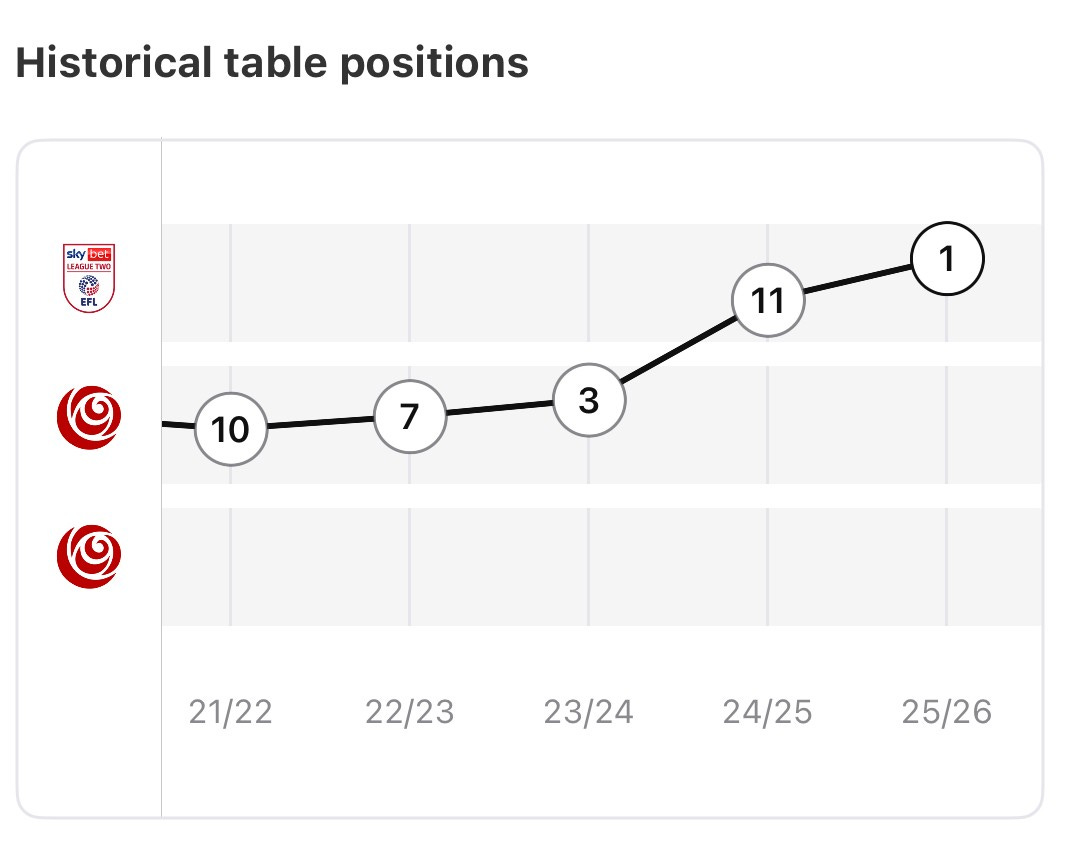
South London’s newest EFL club secured their second promotion in three seasons on Saturday thanks to Notts County’s defeat to Barnet. It took the Ravens 132 years to reach the Football League – and 134 years to reach the third tier.
After finishing 11th in the maiden EFL campaign (and expressing disappointment that it wasn’t higher), Andy Woodman’s side have become the first team to be promoted in League Two this season. But how has the team with the fourth-longest pre-season odds for promotion, and one of the smallest budgets at the level, left their wealthier and/or more established counterparts trailing in their wake?
Fortress Hayes Lane
With one home game remaining, Bromley are the only team in the top six tiers of English football not to have lost a home league game this season (W13 D9). In fact, their last league defeat at Hayes Lane was 3-2 to Karl Robinson’s Salford in March 2025.
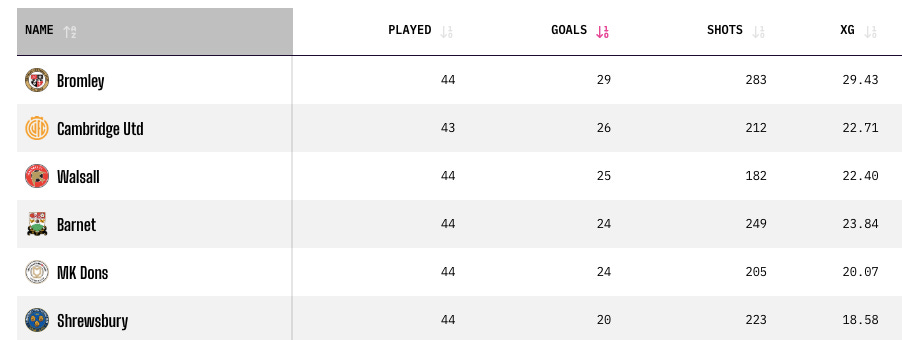
The Ravens scored two or more goals in their first 14 home games this season and they’ve only blanked in front of their home fans twice since. Their home form in 25/26 is in stark contrast to last season, when they had the 15th-best home record in League Two. Have they changed their approach at home? The honest answer is… no. They’re largely doing what they did before – they’re just doing it better.
Michael Cheek (and Nicke Kabamba)
It’s hard to talk or write about Bromley without talking or writing about Michael Cheek. Like Bromley, Cheek had never played in the EFL until the start of last season but, also like Bromley, the non-league goalscoring sensation has taken to life in the EFL like a duck to water. After scoring 25 goals in 2024/25, winning the Golden Boot, Cheek scored 16 goals in 35 games this time around before injury curtailed his season.
The 34-year-old is one of the best strikers at the level – but his deputy, Nicke Kabamba, is undoubtedly the best deputy at the level. The former Barnet man has scored 13 goals in 44 games, but he has started only 17 of those matches and played just 1,939 minutes (compared to Cheek’s 2,901). Batman is good, but Robin is pretty useful as well.
Set piece again olé, olé
Like Lincoln in League One, Bromley have a direct style of play and they’re incredibly effective from set pieces.
After scoring 33 goals from set pieces last season, Andy Woodman’s side have managed 29 this season, which is a tally matched only by Michael Skubala’s Imps across all four divisions. It’s long been accepted that 2025/26 is the season of set pieces, so it won’t surprise you to know that Coventry’s 26 set-piece goals are the most in the Championship. There’s definitely a trend here (get yourselves together, Arsenal!).
Not only do Bromley possess players with outstanding delivery, but they also have the likes of Cheek, Kyle Cameron, Zech Medley and the giant figure of Omar Sowunmi to attack said deliveries. Are the Ravens actually unkind? I don’t know them personally, but they’ve got some big, strong boys in their ranks, so if you turn up at Hayes Lane and you aren’t up for a battle, then you will get turned over.
Recruitment
Bromley generally target younger players who can play in a couple of positions. Not only have they built a squad full of players who suit their style of play, but it’s notable just how many of their players come from London / the South East of England.
The joined-up, long-term thinking behind Bromley’s recruitment was epitomised by the signing of Marcus Ifill in February last year, after he had impresed for Brighton in PL2. With Danny Imray excelling on the right-hand side of their defence, Bromley didn’t necessarily need a player of Ifill’s profile at the time; however, Imray was only at Hayes Lane on loan, so Ifill was given time to bed in before becoming a first-team regular this season.
Of course, when it comes to recruitment strategies, there should always be room for the odd exception to the rule (take note, Chelsea), and in terms of his age, Mitch Pinnock is an exception. The 31-year-old joined Bromley on a free transfer last summer, having briefly played for the club in non-league more than a decade ago. Known as ‘The Postman’ due to his exceptional delivery, he has been the perfect fit for Bromley. Who better to load the bullets — from open play, dead ball and throw-ins — for Cheek, Kabamba and Sowunmi? Having contributed 34 league assists in four seasons with Northampton, Pinnock has registered nine assists in the league for Bromley.
Andy Woodman
The joined-up, long-term thinking demonstrated in Bromley’s recruitment runs throughout the club. Andy Woodman is currently the fifth-longest serving manager in the top four tiers of English football, behind Simon Weaver, Pep Guardiola, Mikel Arteta and Nigel Clough.
Woodman was appointed in March 2021 after leaving his role as Arsenal’s Head of Goalkeeping. The former shot-stopper led Bromley into the play-offs in 20/21, before winning the FA Trophy in his first full season in charge and then winning promotion to the EFL in 23/24. Seven of Bromley’s starters in the National League Play-Off Final victory over Solihull Moors two years ago have featured for the Ravens this season.
In terms of the running of the club, it would be remiss of me not to mention the owner and chairman, Robin Stanton-Gleaves, a local man who – while being incredibly ambitious – prioritises long-term progression and growing the infrastructure of the club, as opposed to throwing money at individual players. Bromley are a community club and the key figures at the club are determined to take that community with them on their incredible journey up the Football League.
With wages and other costs set to soar, can little old Bromley really compete in League One? Ultimately, time will tell, but if anyone can, Bromley can.
Well done Bromley. Hope they manage to sustain their progress - we have seen some traditional non-league clubs get too close to the sun, and then crash and burn.
Re the importance of set pieces. Are the top teams scoring more because they more efficient at scoring from corners, or do they just get more corners because they dominate games? Or is it both?