

It's The Sun Wot Won It – the anatomy of winning at Wembley
Can future EFL play-off finalists learn the lesson of 'playing the conditions'?
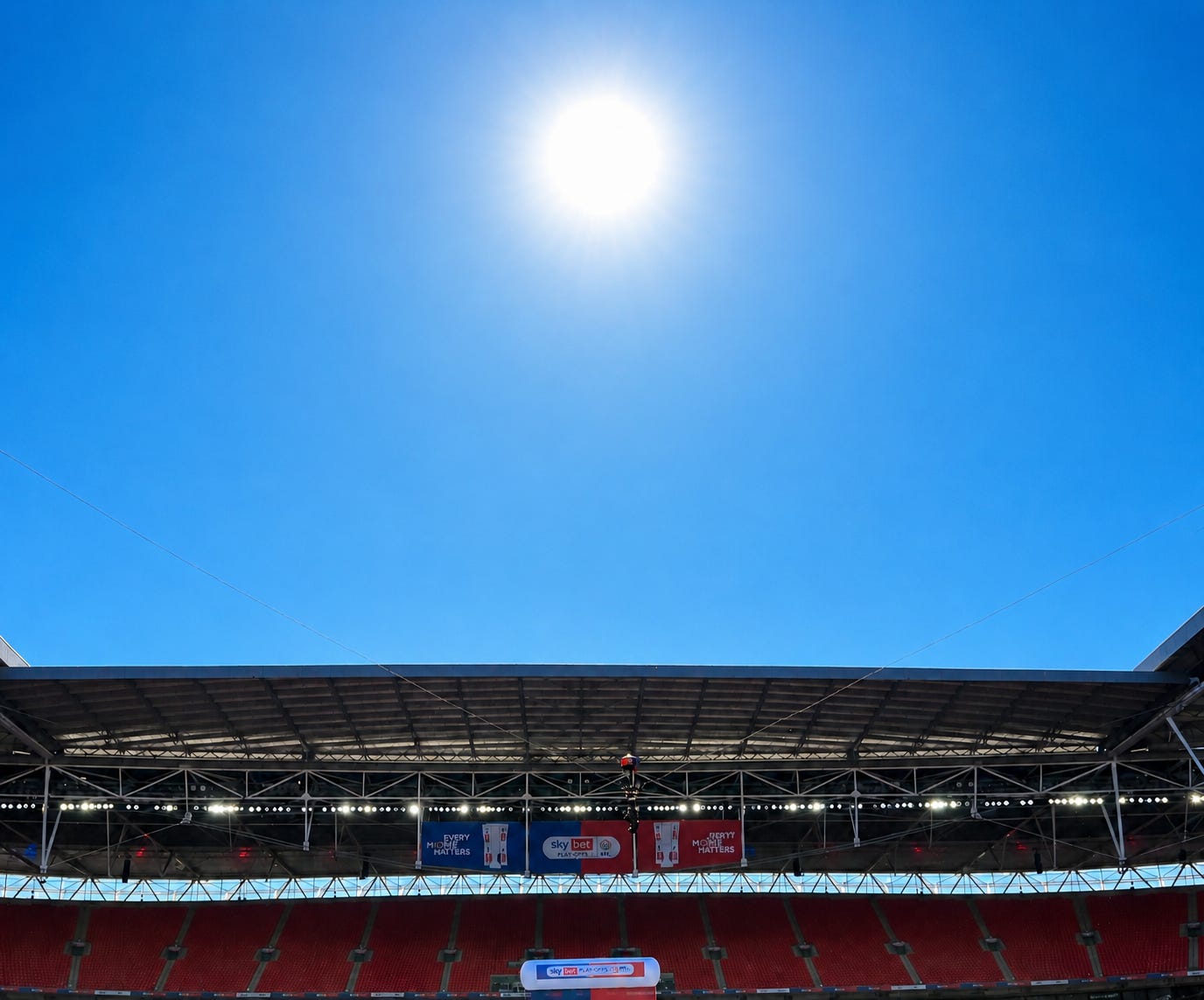
The British obsession with discussing the weather finds its match in football. Over three broiling afternoons, where pitchside temperatures rose above 35 degrees, two great pastimes converged over a strip of grass 105 metres long by 68 wide.
Thousands of supporters now will be occasionally looking down and catching a glance of tan lines that tell of victory or defeat. The sun may not have ‘won’ these play-off finals, but according to a recent study, it is likely to have played a bigger part in all three ties than we might expect.
When academics looked into elite footballing performance at the 2025 FIFA Club World Cup, they found that higher temperatures reduced performance levels. Within that, the most marked influence was age. The older the player, the less they ran at all speeds when temperatures were high. Those speeds spanned sprints and jogs; the sorts of running that come when carrying the ball, closing it down, tracking runners, or moving a defensive unit up and down the pitch.
In three EFL play-off finals, each split into quarters by two drinks breaks, the ability of teams to play the conditions may just have changed the course of promotions. This wasn’t the first year that a heatwave has hit during the biggest matches of the season – the mercury at Wembley touched 41 degrees during Blackpool v Cardiff City in 2010 – so it begs a question: are there lessons that teams can learn for the next time?
Hull 1-0 Middlesbrough
If you were in any doubt of the heat’s significance, recall that Hull put Middlesbrough under the sun in the first half, turning the teams around – a rare sight at Wembley. Oli McBurnie’s eventual winner would be celebrated beneath a sea of head-clutching red.
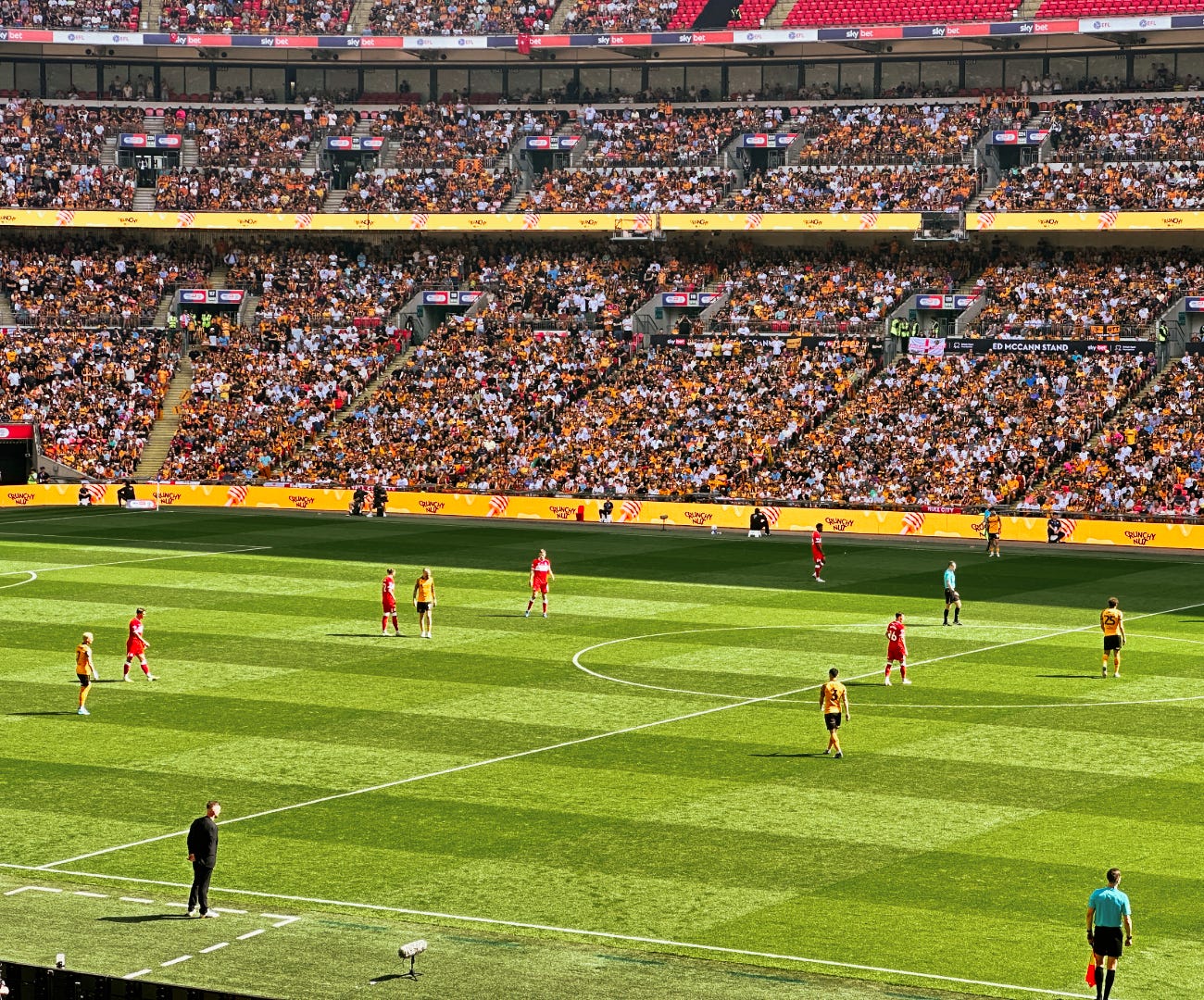
The turnaround was a choice. It was a tactic in a different category to substitutions but perhaps no less significant, and undoubtedly interrelated.
