


Middlesbrough
Sam Parry
I want to turn away from the circus that brought Middlesbrough to this point. Trouble is, even with our backs to it, you can already feel the debate that would follow a win at Wembley. Promotion in these circumstances would come with baggage. It would also come with costs. We know about those. In turn, what that might mean for a club who, like a certain spy, have undergone a costume change of their own is fascinating.
Ten years ago, Middlesbrough were promoted to the Premier League. After conceding the fewest goals in the Championship during promotion in 2015/16, Aitor Karanka’s team spent a single unsuccessful season in the top flight playing rope-a-dope.
They conceded the tenth-fewest goals in the division that year – a great chin for pain, yes. But they could not throw enough jabs, despite spending close to £50m on players and assembling an absurd variety of attacking options: Álvaro Negredo, Rudy Gestede, Cristhian Stuani, Adama Traoré, Gastón Ramírez, David Nugent, Jordan Rhodes and Patrick Bamford.
Other names feel surreal in hindsight. Marten de Roon. Víctor Valdés, whose honours list runs beyond my word count.
What I find strange, looking back, is how it all’s so unlike today’s Middlesbrough. The personnel echoed previous Premier League swings involving Juninho, Emerson and Ravanelli. Stylistically, though, it feels alien now.
If football, like politics, had its own horseshoe theory, Middlesbrough have spent a decade travelling around it.
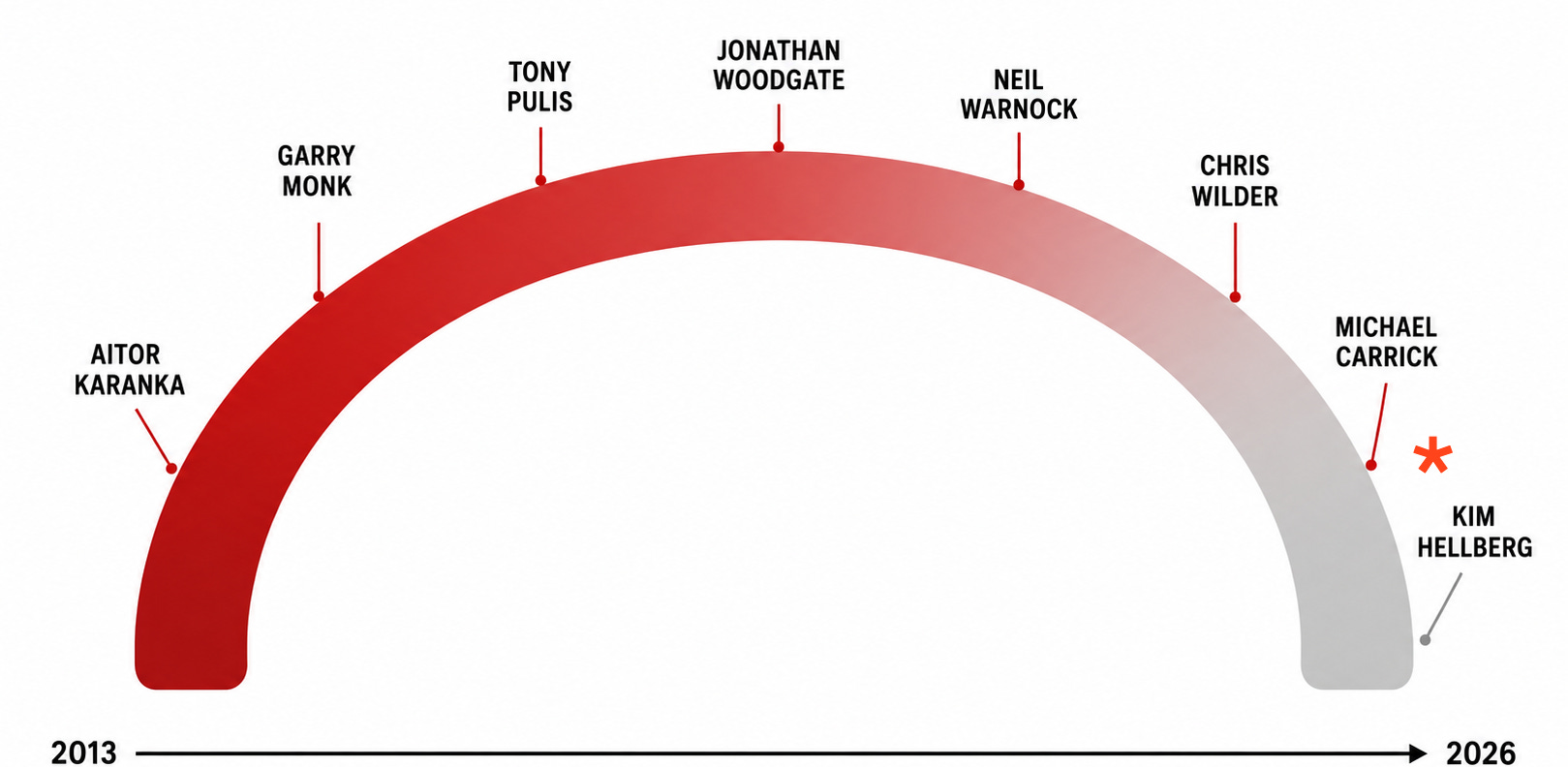
They’ve gone from hyper-defensive to hyper-attacking; pragmatism to idealism; traversing the third way, the right way and, many times, the wrong way. Yet amid all that movement, Boro may finally have stumbled upon something unusual: change that appears to have nailed it from both standpoints.
On that imaginary horseshoe, Kim Hellberg may actually sit closer to Karanka than Neil Warnock – not stylistically, but in ideological purity. Through control and attacking patterns, rather than defensive shape, his side reduces opponents to very few opportunities at all.
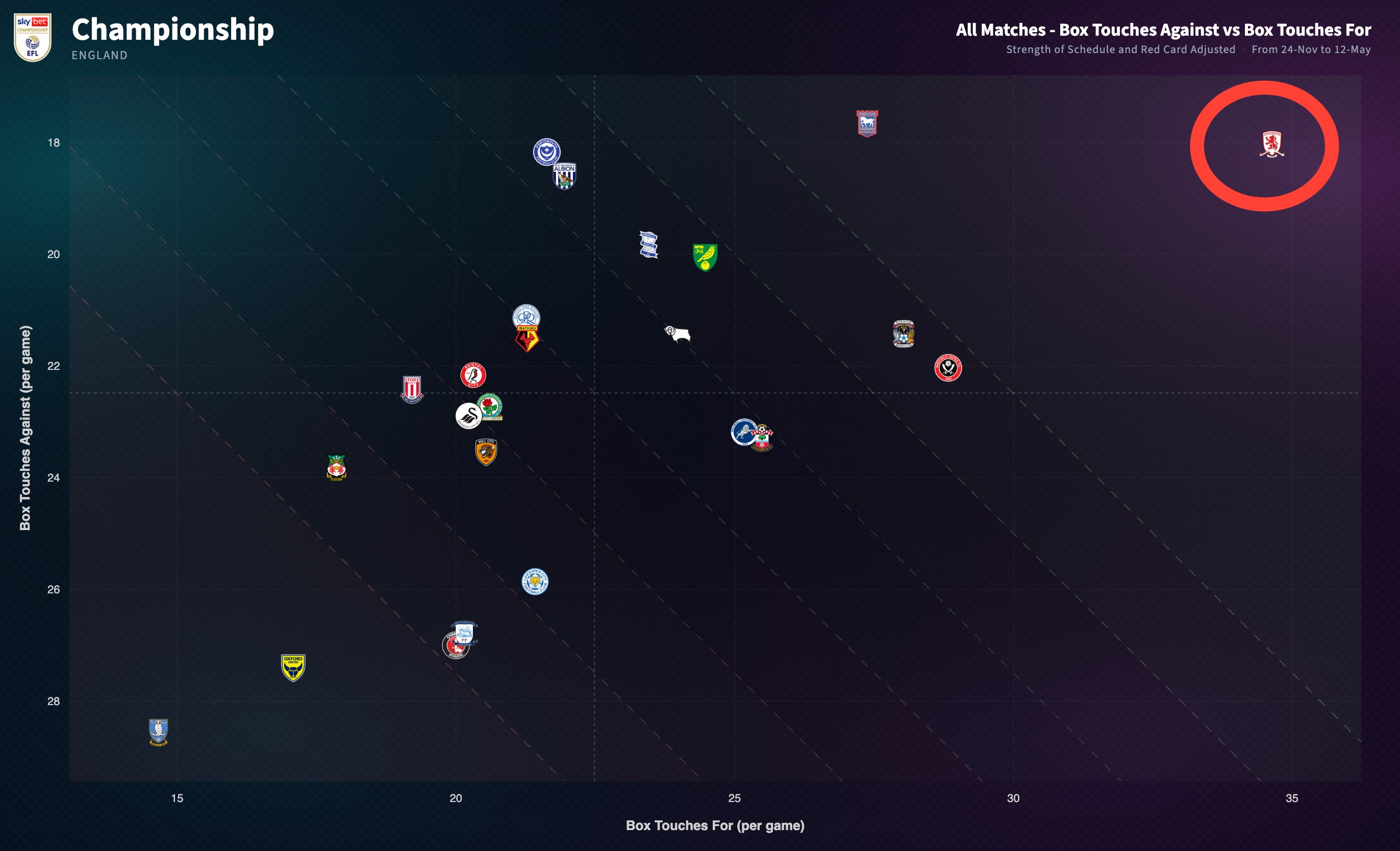
Since Kim Hellberg’s appointment, Middlesbrough have had more touches in the box than any other Championship team whilst conceding the second-fewest.
Of course, Hellberg inherited a very good Championship team, but he has succeeded in making it considerably more threatening. Possession is rarely used as decoration, but domination; attacking threat so considerable that opponents struggle to commit bodies forward. There are caveats: Boro don’t have the natural goalscorers to consistently finish the volume of chances they create, nor the squad depth to maintain such relentlessness over 90 minutes.
Therein lies the practical question that promotion raises.
The Premier League is punishing. Control becomes harder to impose. Space shrinks. Missed chances become losses. Mistakes become goals. Hellberg, whose teams produce wonderfully watchable football, would need either to revise elements of his approach or spend heavily and smartly to even attempt to bridge the gap.
Last time they were in the Premier League, you could characterise Boro’s squad-building as a collection of has-beens and could-bes. Newly promoted clubs always recruit with one eye on survival and another on the possibility of immediate relegation. They always have to balance what succeeded in the Championship with what can survive in the top flight.
Promotion could mean a significant change to the Hellberg blueprint. More fascinating would be if it did not, and instead, promotion meant building on the blueprint at the highest level. Or else, selfishly, enjoying more Hellberg football in the Championship with two fixtures against a nascent nemesis.
